On the work and how I got here
Founding CEO of Próspera International
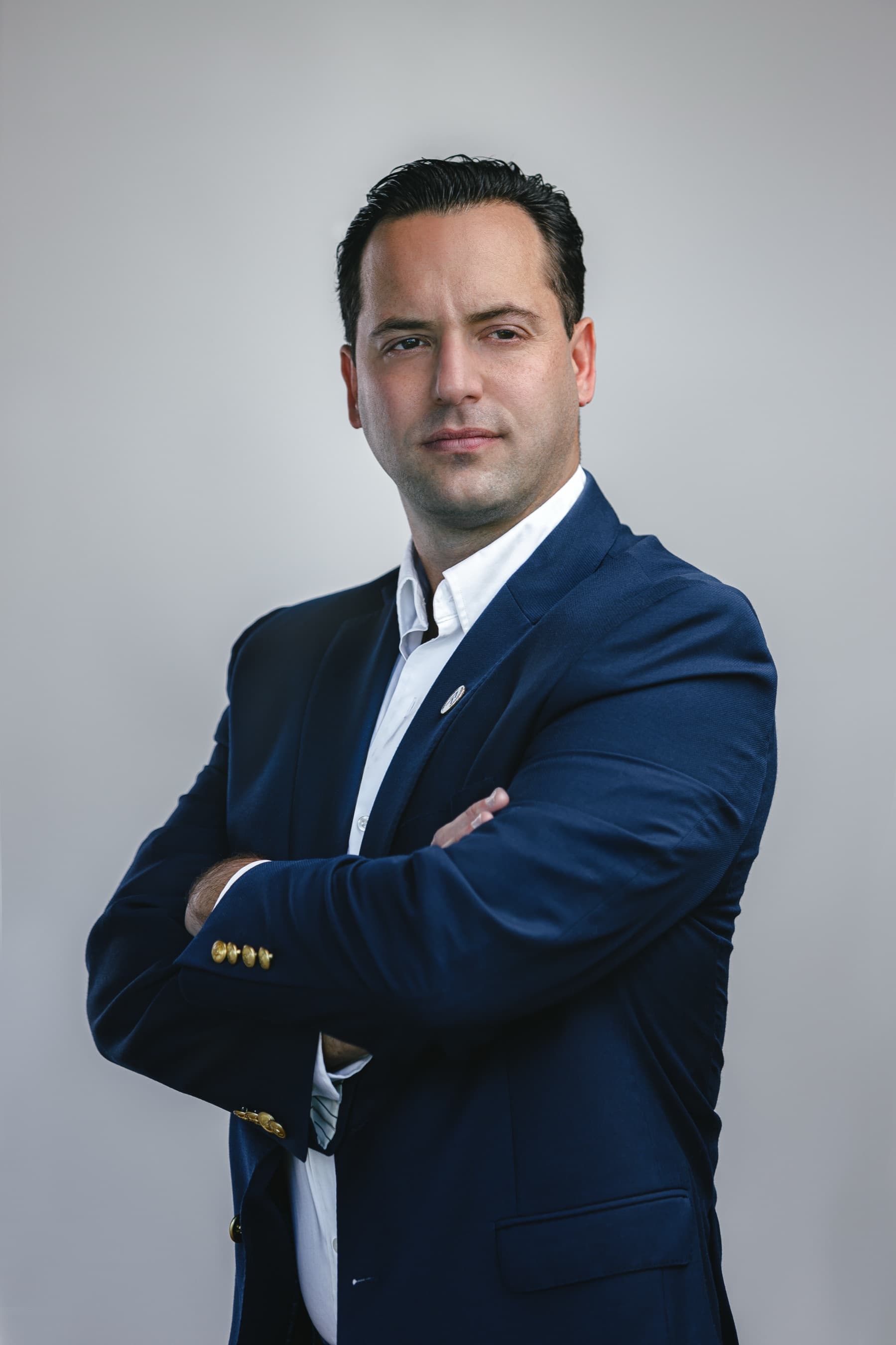
Venezuelan-American, by choice
I was born in Venezuela. I grew up watching a country with extraordinary natural wealth fail to produce broad prosperity for the people who lived in it. The income gaps and the poverty around me did not have a natural cause. They were the predictable output of institutions that had been hollowed out by a political project that treated real capacity-building as a threat to its own power. Watching that happen up close, in real time, formed the conviction that has run through everything I have done since: institutions are the variable that compounds. Get them right and a society can take care of itself. Get them wrong and no amount of resource wealth, foreign aid, or good intention will close the gap.
I became an American by choice. The institutional architecture I had watched my birth country dismantle was the architecture the United States had spent two centuries building, and I wanted to learn it from inside the country that had built it. After Babson College, I worked across finance and operating roles at Brown Brothers Harriman, A.G. Edwards, Ernst & Young in London, and Borealis Group in Latin America. Each role taught me a different piece of how institutional capacity actually gets built, financed, and sustained, and each sharpened the question I had carried out of Caracas: what is the configuration that produces durable prosperity, and how do you build it where it is missing.
The other conviction that has shaped my work is that entrepreneurship is among the most heroic endeavors a person can take on. To start something that did not exist, identify a real problem in the world, and bear the cost of building the answer until it stands on its own, is the most direct way I know to improve the human condition. Every company I have founded has been an expression of that. ComparaMejor was a wager that price-comparison transparency could lower the cost of household financial services for ordinary people in Latin America. NeWay Capital was a wager that institutional capital could be assembled to back work that traditional finance was not built to underwrite. Próspera International is the largest version of the same wager: that the institutional architecture some societies need can be built deliberately, by the kind of patient private capital and operating discipline only entrepreneurship can mobilize.
My wife Colleen and I are raising three children. The long horizon I think on for the work, institutions that outlast their founders and jurisdictions that compound for generations, is the same horizon I think on at home.
Honduras Próspera is the first project under Próspera International. It has been operational since 2017, and nine years in, it is the proof that the work can be done. The model is country-agnostic in principle and country-specific in execution: a private American principal building real institutions on allied soil, on terms set by the host country that wants them, anchored in American legal and operating capacity, in service of an American foreign-policy interest that traditional government tools cannot reach. There will be others. This is the work I expect to spend the rest of my life on. The conviction I carried out of Venezuela has only sharpened: institutions are the variable that compounds, and the country I now call mine has the legal, financial, and operating architecture to help build them where they are needed.